Crown lifting in Manor Park
If you are looking for crown lifting in Manor Park, you are probably trying to solve a very practical problem: a tree that is healthy enough to keep, but low branches are getting in the way. Maybe they are brushing against a path, hanging over a driveway, blocking daylight from a front room, or making access awkward for vehicles and pedestrians. In a busy local area like Manor Park, that kind of issue is common, especially where gardens are compact, trees sit close to boundary lines, and front elevations need a bit more light and breathing room.
Crown lifting is one of the most useful tree surgery services for homeowners, landlords, housing managers, shops, offices, and commercial premises. Done properly, it can improve clearance without stripping the tree of its character. It is not about turning a tree into a bare pole. It is about carefully removing selected lower branches so the crown starts higher, while the tree still looks balanced and continues to grow well. For local customers in Manor Park, this often means better access, safer movement around the property, and a tidier, more open feel.
We understand that people want a service that feels straightforward and considerate. You may need a one-off visit, routine maintenance, or advice on whether crown lifting is the right option at all. This page explains what the service involves, what it can achieve, what affects the cost, how to prepare, and why using a local team familiar with Manor Park and the surrounding East London area can make the whole process smoother.

What crown lifting means and why it is done
Crown lifting, sometimes called canopy lifting or raising the canopy, is the selective removal of lower branches from a tree’s crown. The aim is to increase the height of the canopy above ground level, creating clearer space underneath. This can be useful for vehicles, pedestrians, garden use, bins, shopfront visibility, and improving daylight around the property.
In practical terms, a crown lift may help if a tree is:
- Overhanging a pavement, driveway, or shared access route
- Blocking light into a room, courtyard, or garden
- Interfering with parked cars or vans
- Making mowing, cleaning, or general maintenance difficult
- Reducing visibility near entrances, gates, or windows
For trees in Manor Park, the need for crown lifting is often linked to the local property layout. Many homes in the area have front gardens, boundary planting, and mature trees positioned close to paths or brick walls. Some properties also sit along busier roads or narrow residential streets where access matters more than in a more open setting. A well-planned crown lift can solve those issues without removing the tree altogether.
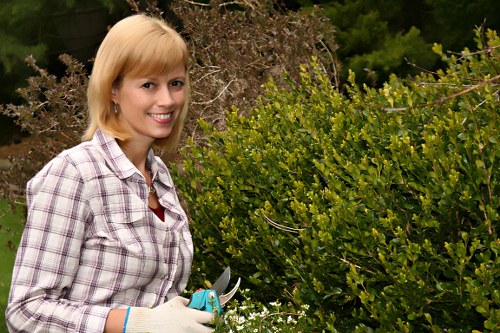
Crown lifting in Manor Park for homes, landlords, and businesses
Different customers need different outcomes. A homeowner may want more light into a bay window or safer clearance above a family garden. A landlord may want to reduce complaints about branches hanging over a driveway or shared path. A business owner may need better visibility and a cleaner, more welcoming frontage for customers, staff, and deliveries.
That is why crown lifting in Manor Park needs to be done with a local, site-specific approach rather than a one-size-fits-all cut. The tree species, its age, its condition, and its location all matter. A young ornamental tree may need only light adjustment, while a mature street-facing tree may need careful lifting in stages to maintain structure. We also need to consider whether the tree sits inside a private garden, close to a rear access lane, or near a commercial yard with regular vehicle movement.
Manor Park includes a mix of terraced homes, semi-detached properties, flat conversions, side returns, and commercial units. That variety makes access planning important. Some sites have limited space for tools and waste removal. Others have narrow side passages or shared entrances that require careful communication with neighbours. A local tree surgery team that knows the practical realities of working in the area is better placed to carry out the job efficiently and with less disruption.

How crown lifting is carried out
A proper crown lift starts with a close look at the tree and the site around it. The operative needs to understand which branches can be removed safely, how much clearance is required, and whether the tree will remain in good shape after the work. In some cases, the tree may only need a modest lift. In others, the work needs to be phased to avoid creating a top-heavy look or exposing the trunk too much.
The process usually includes the following steps:
- Assessment of the tree’s size, health, species, and location.
- Identification of low branches that are causing access or light problems.
- Selective pruning to remove the right branches while protecting the natural shape of the crown.
- Clean finish so the tree looks neat rather than overcut.
- Waste removal and tidying of the site after the work is complete.
For a safe and attractive result, it is important that crown lifting is not done aggressively. Removing too much foliage at once can stress the tree and make it look unbalanced. A professional approach keeps enough lower growth where needed for health and appearance, while still creating the space the customer asked for.

Benefits of crown lifting for Manor Park properties
Customers often choose this service because it brings a noticeable improvement without the disruption of full removal. If a tree is otherwise healthy, lifting the crown can be the right balance between keeping the greenery and restoring practical use of the space. For many Manor Park homes, that means the garden feels more open, the property looks tidier, and everyday movement becomes easier.
Some of the main benefits include:
- Better access for walking, cycling, parking, and deliveries
- Improved light into rooms, gardens, and boundary areas
- Reduced obstruction around entrances, paths, and driveways
- Cleaner appearance for front gardens, commercial facades, and communal spaces
- More usable outdoor space for seating, play, or maintenance
- Lower risk of minor contact with vehicles or pedestrians under low branches
In neighbourhoods with a mix of private houses and commercial premises, the visual effect matters too. A carefully lifted tree can improve street appeal while still keeping the site green and welcoming. For shopfronts, offices, and other customer-facing properties in and around Manor Park, that can be particularly valuable.
Strong local knowledge also helps when the tree sits near shared boundaries, rear access paths, or public-facing areas. In those situations, it is important to work tidily, respect neighbouring spaces, and plan the job so disruption stays low.
What is included in a crown lifting service
When local customers request crown lifting, they usually want more than just a quick cut. They want a service that is organised, careful, and finished properly. While every tree and property is different, a typical service may include the following:
- Site review and discussion of the clearance needed
- Professional pruning of lower branches
- Attention to the tree’s natural structure
- Safe handling of cut material
- Removal of waste from the site
- Final tidy-up so the area is left usable
Some customers also ask about combining crown lifting with other tree care, such as light crown thinning, deadwood removal, formative pruning, or general maintenance. That can be sensible if the tree needs several improvements at the same time. However, it is always best to make sure the work is suitable for the species and condition of the tree before any cuts are made.
Not every tree needs the same level of work. A good local service should explain what is needed in clear language and avoid unnecessary pruning. If a tree only needs a few lower limbs removed, there is no reason to overdo it.
When crown lifting is the right choice
Crown lifting is often the right solution when the main issue is low clearance rather than the overall size of the tree. If the canopy is healthy but the lower branches are causing practical problems, raising the crown can be a sensible and cost-effective option. This is especially true where residents want to keep mature trees but reclaim useful space beneath them.
It may be a good option if you are dealing with:
- Branches blocking a garden gate or side passage
- Tree limbs hanging over a driveway or parking area
- Branches obstructing a shop entrance or frontage
- Low growth interfering with mowing or landscaping
- Canopies making pavements and walkways feel cramped
There are cases where another approach is better. For example, if the whole crown is too dense, crown thinning might be more suitable. If the tree is too large for the site, a more extensive reduction may be discussed. If the tree is diseased, unstable, or has structural defects, pruning alone may not be the full answer. A responsible local team will explain the options clearly rather than simply recommending the same service every time.
How to know if a tree in Manor Park needs lifting
Many customers notice the problem gradually. The branch that once seemed harmless begins to hang lower. A parking space becomes awkward to use. A window feels darker. Or maintenance around the base becomes harder because the tree’s canopy is too low. In a built-up area like Manor Park, these small issues can add up quickly.
If you are unsure, it helps to ask a few simple questions: Is the tree still healthy? Is the problem mainly about clearance? Would removing the lower limbs improve access without harming the appearance of the tree? If the answer is yes, crown lifting may be the right choice. If not, another type of tree surgery may be more appropriate.
Local experience matters here because trees behave differently depending on species, age, and planting conditions. A tree growing beside a paved front garden will not respond the same way as one standing in a large rear plot or an open commercial yard. Knowing how to judge those differences saves time and reduces the risk of poor results.
Why a local Manor Park team is useful
Choosing a local company for crown lifting in Manor Park can make the process simpler from the start. Local teams understand the typical access challenges, parking restrictions, and property layouts common to the area. They also know that some jobs need careful scheduling so there is less disruption to households, neighbours, tenants, or business operations.
That local familiarity can help with:
- Finding practical access to the property
- Planning around narrow roads or limited parking
- Working neatly in shared driveways or side passages
- Reducing disturbance in residential streets
- Adapting to gardens, courtyards, and commercial forecourts
For many customers, the real value of a local service is communication. It is easier to arrange a visit, explain what is needed, and get advice that reflects the actual site conditions. If your tree overhangs a boundary with another property, sits close to a fence, or affects a walkway used by several households, a local specialist can take those details into account before the work begins.
Residential and commercial customers welcome
Tree work in Manor Park is not limited to private gardens. Residential and commercial customers both need reliable clearance, tidy presentation, and safe working practices. Homes may need more sunlight and easier access, while business properties may need a smart look and less obstruction near entrances or loading areas.
Examples of properties that may benefit from crown lifting include:
- Terraced houses with front garden trees
- Semi-detached homes with driveway trees
- Flats with shared communal planting
- Shops and offices with frontage trees
- Yards and service areas where access matters
Whether the tree is on a domestic plot or in a working environment, the aim is the same: create safe, useful space while keeping the tree attractive and healthy.
What affects the price of crown lifting
Most customers want to know what influences the quote before booking. Because every tree is different, pricing is usually based on several practical factors rather than a fixed figure. That is normal for tree surgery and helps ensure the estimate reflects the actual work involved.
Common pricing factors include:
- Tree height and overall size
- How many lower branches need removal
- Species and growth habit
- Access to the site and parking arrangements
- Whether waste needs to be removed from a confined area
- Proximity to fences, sheds, buildings, or public footpaths
- Any need for additional pruning or follow-up work
If access is tight, the job can take longer because equipment may need to be carried through narrow side passages or around parked vehicles. Likewise, trees close to boundaries require more careful handling so the finish is neat and the surrounding property is protected. In some cases, a staged approach is better if the tree needs gradual adjustment rather than a single heavy lift.
A clear quotation should explain what work is included and what site conditions have been taken into account. That way, you can compare options properly and choose the service that best fits your property and budget.
How to prepare for the visit
A little preparation can help the job go more smoothly and reduce delays. Most of it is simple common sense, but it makes a real difference on the day.
- Move cars if they are parked under or near the tree.
- Keep garden furniture, ornaments, and fragile items away from the work area.
- Unlock gates or side access if needed for entry.
- Let neighbours know if branches hang over shared boundaries.
- Check whether any communal arrangements apply in flats or shared properties.
If the tree is near a public pavement, a business entrance, or a shared access route, it is helpful to make sure the area is kept as clear as possible. That helps the team work safely and efficiently and reduces disruption for everyone nearby.
If you are not sure what to prepare, just ask for guidance when you enquire. A good local company should be able to tell you what will help before the visit takes place.
Safety, tree health, and a neat finish
Crown lifting should always be carried out with safety and tree health in mind. The aim is not simply to cut branches away, but to remove them in a way that supports the tree’s long-term structure. That means selecting the right limbs, making clean cuts, and leaving enough canopy for the tree to function properly.
Good practice matters for several reasons:
- It helps the tree recover well after pruning
- It avoids the look of overcut or uneven growth
- It protects surrounding features such as fences and paving
- It reduces unnecessary stress on mature trees
- It leaves the site safe and tidy for continued use
In a local setting like Manor Park, where many properties are close together, finishing standards count. Customers want their tree work done without mess left behind, damage to planted areas, or unnecessary disruption. A professional job should leave the property looking better and feeling easier to use, not just shorter in height below the crown.
Areas covered around Manor Park
Customers looking for crown lifting in Manor Park often also need service across nearby parts of East London. That can include surrounding residential streets, mixed-use areas, and places where trees sit close to homes, shops, or shared access routes. The key is having a local team that can travel to nearby neighbourhoods without making the process complicated.
Areas commonly covered may include nearby districts and neighbouring communities around Manor Park, as well as properties along local residential roads, side streets, and commercial pockets. If your property is just outside the immediate area but still close enough for a practical visit, it is worth asking whether the service can be arranged.
For customers with multiple sites, such as landlords or business owners managing more than one property, it can also be helpful to book tree work across different locations with one trusted local provider. That keeps communication simple and ensures the same standard of care across every site.
Frequently asked questions about crown lifting
How much of the crown can be lifted?
That depends on the tree species, condition, and the level of clearance required. A modest lift is often enough for gardens and walkways, while some sites need more height under the canopy. The right approach is to lift only as much as needed while keeping the tree balanced and healthy.
Will crown lifting damage my tree?
When done correctly, crown lifting should not damage a healthy tree. The work must be selective and proportionate. Problems usually arise when too much is removed at once or when cuts are made without considering the tree’s structure.
Is crown lifting suitable for all trees?
Not always. Some trees respond well to it, while others may need a different form of pruning. The species, age, and condition all matter. A professional assessment helps decide whether lifting is appropriate.
Can the service be done on a tree near a boundary?
Yes, crown lifting is often carried out on boundary trees, especially where branches overhang a neighbour’s side or a shared access route. Careful planning is important to keep the finish neat and respect adjoining spaces.
How often should a tree be lifted?
There is no fixed schedule. Some trees need attention every few years, while others may stay suitable for longer. Growth rate, species, and the level of use beneath the canopy all affect timing.
Do I need permission before the work is done?
Sometimes checks are needed depending on the tree’s status and location. If there is any doubt, it is sensible to ask before work begins so the correct process is followed.
Why customers choose this service
People usually book crown lifting because they want a practical improvement that makes daily life easier. It is a service that can solve several problems at once: more light, better access, cleaner lines, and a tidier overall appearance. In a place like Manor Park, where space can be at a premium, that kind of improvement can make a noticeable difference to how a property feels and functions.
It is also a sensible choice when you want to keep a tree rather than remove it. Mature trees add value to a property’s look and atmosphere, but they should not make access uncomfortable or awkward. Crown lifting strikes a useful balance by preserving the tree while adapting it to the site around it.
In short: if low branches are causing a nuisance, but the tree itself is worth keeping, this service may be the right answer.
Book crown lifting in Manor Park
If you are ready to improve access, brighten up your property, or make a tree more manageable, contact us today to discuss your requirements. Whether you are a homeowner, landlord, or business customer, we can help assess the tree and explain the most suitable next steps.
Request a free quote if you would like to compare options for a single tree or several trees on the same site. If you have a particular clearance issue, such as a driveway, boundary path, or shopfront canopy, mention that when you enquire so the service can be tailored to your needs.
Book your service now and take the next step toward a safer, tidier, and more usable outdoor space. For crown lifting in Manor Park, a local, practical approach can make all the difference.
Helpful reminders before you decide
Ask for a clear explanation of what will be removed, how much clearance will remain, and whether any follow-up care may be useful later. If you are comparing quotes, make sure you are comparing the same scope of work. That will help you choose with confidence and avoid surprises.
Every property is different, and the right solution depends on the tree, the site, and how the space is used. That is why a proper inspection and sensible advice matter more than a quick guess.
If your tree is valuable but simply in the wrong place for the way you now use the property, crown lifting may be the ideal middle ground.